Showing posts with label AHC. Show all posts

Sunday, July 22, 2012

All quiet on the Southern Front

For all those out there eager to see progress, join the club!!  We've had a very cold start to our winter and working in unheated hangars (are there any other varieties?) has sort of put paid to any meaningful work that can be a) commented on, or b) illustrated.  So Rex has retired to his heated garage to work on the metal aileron fittings and I have done a little work on covering the ailerons themselves.  Once Rex has finished the fittings -and the weather warms up a bit!- we'll be close to doing some trial fitting of the wings.  THEN you'll get to see some photos!  The trial fitting is, of course, needed so that we can do some calculations as to the dimensions for the Interplane V struts, flying and landing wires, and the length -and positioning- of the ailerons control rods.  Specifically the clearance of the already fitted instruments.

Another skill just learnt has been swaging -the first attempt being a total failure! But I think I've got things right now for the undercarriage bracing and the brake cables (drums not discs).

Actually there is a photo I can provide of the Morane G that has been sharing our hangar to date and which is now completed and on display at the Aviation Heritage Centre.  This represents the Russian Alexandr Kozakov's machine with grappling hook thrown out to rip a wing away.

Thursday, June 16, 2011

Another milestone!

Yes, we now have performed our first 'bagging' operation -'bagging' being a local(?) term for fabric covering.  The item concerned is the tailplane which was a pretty logical choice since it consists of mainly straight edges. Needless to say we operated under the eagle eye of our local expert, Jay McIntyre.

This Sunday we hope to get a bit more adventurous and start on the elevators and/or rudder -both of which have plenty of curves. And probably without supervision.

These modern fabrics are quite incredible as to their tolerance of tyro's activities. And with a quick runover with a warm iron the fabric becomes pretty taut.  Of course, there's still a long way to go before they'll be ready for flying order, but at least it's a start.

Rex, meanwhile is making great strides with the lower wings, with the spars now finished, the ribs in place and just the leading trailing and end edges to go.  Things are looking up!! (Especially as I notice I have a new follower -welcome to my world.)

In addition I was pleased to be able to show a delightful American Aviation Writer, Christine Negroni, around the AHC who, after a being entertained to a lunch, also had a good look at all our restoration work being done at Omaka.  Nice write-up about the AHC!

Thursday, December 2, 2010

Eureka!!

As some ancient Greek is reported to have exclaimed.  I think I've mastered the sound system - or at least that part that I was messing around with.  There's still another area where I think the guy who did the installation has buried a mini mp3 player somewhere untraceable in the complex.  Still it's not doing any harm so I guess we can live with it.  We continue to get overseas visitors coming through, some old, some young -in fact we had a young Swedish couple come through who spent about two and a half hours going through the AHC.  So it's heartening that the younger people are showing an interest in what their Great Grandfathers and Uncles got up to in that conflict.

We've now had some new engine brackets manufactured for us in which we will have to drill the appropriate mounting holes.  So we can't blame anyone else if it goes wrong.  This will definitely NOT be a one man job! Then we can take a look at mounting the engine and finding out where all extras need to be fittted and what extra piping is needed to connect the oil and petrol tanks to the appropriate orifices.

We've also had some holes drilled in the brake mounting plates so we can now look towards how we are going to mount  and run the Bowden cables.  One more piece of welding to be done for the battery and we'll be that much closer to the next step of covering the fuselage, while Rex progresses with the wings.

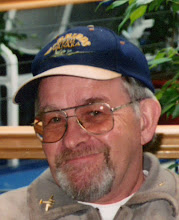
The weather is decided warmer which means we can work with the hangar doors open, the downside being that at this time of year we get rather strong Nor'westers blowing so maybe the doors won't be fully opened. The other downside is that flying the Tecnam in a Nor'wester isn't much fun so I'm going to have to be careful about the time of day I go up.  And I also need to get some time in on a 'tail dragger' in preparation for the day when I can emulate those young men in WW1.  At least in the flying bit - physically I don't stand a chance being somewhat rounder and heavier than them.  Mind you, the face (if it was a bit thinner) with all its wrinkles might perhaps match some of the older ones who managed to survive a few months at the Front....

Sunday, January 24, 2010

Second as opposed to Last Post

Having mastered(?) the first effort, let's try a second one. "Why a Nieuport 16?" I hear you say. Apart from the obvious "Why not?" the main reason is that we got it cheap! The guy we bought it from had only bought it himself to get the engine, so wasn't too fussed about the rest of it. It is actually a 7/8th scale Nieuport 17 but the dimensions fit nicely for a full size '16'. Again I hear the cry "Why?". Apart from it being an overpowered '11', it was used by a notable English RFC pilot called Albert Ball, VC. And we plan to honour him by painting it in his colours.

My bookshelf is rapidly filling up with books about the Nieuport concern, the aircraft it built and the pilots that flew them. Where did this zeal come from? My 'work' at the Omaka Aviation Heritage Centre (www.omaka.org.nz) has sent me down the research path finding out interesting snippets about the exhibits (well, I think they're interesting, even if everyone else doesn't). The most interesting thing for me is discovering just how clever, innovative and resourceful our forefathers were. Just one example: the cylinders of the rotary engines were milled from solid metal to make the walls just 1.5mm thick. I think we'd be hard pressed to do that these days with all our high-tech equipment; it's hard to imagine how they could do it back then.

Saturday, January 23, 2010

The first thought


What the hell have I got myself into now??

I have long held a dream to fly and after quite a few decades that dream is slowly being realised. On top of that I have become involved with a syndicate to build a replica Nieuport 16 to microlight standards. "Why?" you may well ask! To try to get a feel for what our grandfathers (perhaps I need to add Great-, if not, Great, great-grandfathers to that) went through in that supposed "War to end all Wars". Which just goes to show that Man just will not learn. And as a by-product of that to give other people a similar feel, albeit from the ground. Only time will tell how successful I'll be in all three ventures (the third one being how I get on with this strange thing called 'blogging').

So this is the start of the jigsaw.............